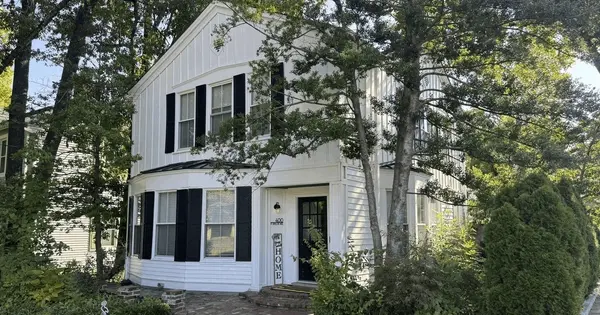
What Does "Villa" Actually Mean When You Are Buying in West County?
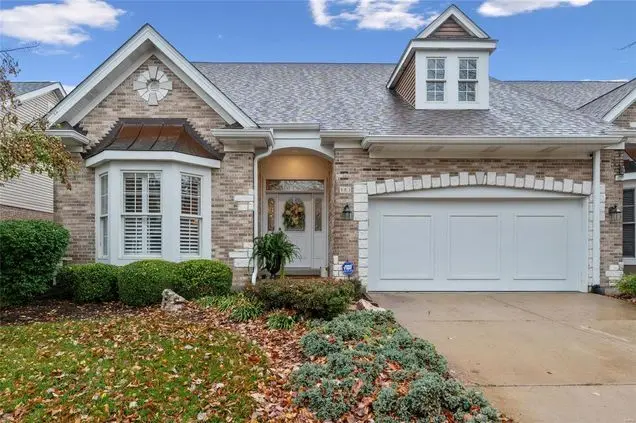
What Does "Villa" Actually Mean When You Are Buying in West County?
Villa is a style word, not a form of ownership. It tells you the house is probably on one level, probably has a small yard somebody else mows, and probably sits in a community with an association. It tells you nothing about what you are actually buying.
Underneath that one word, you are buying one of two very different things. Either you own a unit inside a condominium and a share of everything around it, or you own a lot with a house on it and belong to an association that maintains certain things. Same word on the listing. Different deed, different financing, different insurance, different rules about what you can do.
I have been reading through the governing documents for a number of West County communities, and the gap between them is wide enough that I would not let a client assume anything. Stonehill Village in Chesterfield has three separate associations inside one gated development, and they do not all answer the same question the same way.
The two kinds
In a condominium, you own your unit and an undivided share of the common elements. Baywood Villages and Conway Meadows in Chesterfield are both condominium associations, and both are bigger and more mixed than people realize. Conway Meadows alone has 181 units, 72 of them across three mid-rise buildings and 109 townhomes in clusters of two to five. Baywood has villas, townhouses and mid-rise buildings under one association.
In the other kind you own the lot. The Villas at Westmeade is set up through an indenture recorded with the St. Louis County Recorder of Deeds, with individual lots and living units. The Meadows at Stonehill Village B works the same way, with covenants and village trustees. You hold title to the ground.
Why it matters before you write an offer
A lender treats a condominium differently. There are questions about the association itself, owner-occupancy ratios, reserves, pending litigation, that simply do not come up on a lot purchase. If somebody is pre-approved and assumes that approval covers any villa they like, that can go sideways late.
Insurance works differently too, and in ways that catch people. At Stonehill Village B, owners are required to insure their living unit and to name the association as an additional insured, with a certificate submitted annually. If the management company has to chase that paperwork, the homeowner pays for the time. And the rules state plainly that any insurable loss, regardless of cost, is the homeowner's responsibility.
Four things I would want to know before touring
These are real rules from real West County communities. None of them is unusual. All of them have changed somebody's mind.
Can you rent it out, ever? The Knolls at Stonehill Village A prohibits it. Owners are prohibited from leasing, and the board may waive that only for personal hardship or unanticipated circumstances such as military service or a medical condition. The restrictions say why in plain terms: to foster owner-occupancy, inhibit transiency and protect property values. Short-term rental is ruled out separately and by name, including home exchange, swap, Airbnb and VRBO. Even where a waiver is granted, the owner has to run a background check on the tenant, hand over the governing documents, and file the lease with the board ten days before it starts.
Worth knowing that Stonehill Village is not one association. The Knolls is Village A. The Meadows is Village B, and its rules read differently, which is exactly the point. Same development name, different answers, and there is a specific reason for that which I get into below. Baywood Villages and Conway Meadows both permit leasing but require a twelve-month minimum, and Conway Meadows does not allow leasing part of a unit.
Can you add on? At The Knolls, no residence or structure may exceed the height of original construction, one-story or two-story depending on what was built there. So a buyer picturing a second floor over the garage has their answer before they tour. Material and color changes also go through a committee, and using anything other than a pre-approved material or color counts as a major alteration.
And one that matters if you are handling a parent's home: at The Knolls, an owner may hold an estate sale only after giving the board at least fourteen days' written notice, and only on terms the board sets. If you are planning a weekend sale before a closing, that is not a detail you want to discover on a Thursday.
There is also a provision worth knowing for anyone whose house is in a trust. A lot held in trust counts as owner-occupied if the person living there is a beneficiary who is also the grantor of the trust, or that person's spouse or direct family member. Trust ownership is common in this price range and the documents do not all address it.
What happens to an addition the last owner built? This is the one almost nobody knows. At Baywood Villages, when an owner gets approval to add something like a screened porch, an enlarged deck or a patio, the upkeep of that addition stays with the owner permanently. At resale it transfers to the next owner. So if you buy a unit with a lovely screened porch, that porch is yours to maintain, not the association's. It should be disclosed at sale. Ask anyway.
Who is responsible when the basement takes water? Conway Meadows addresses this directly for its townhomes, and the language is worth knowing. The association is responsible for structural integrity. It is not responsible for damage from water, rain seepage or leakage, and it treats hydrostatic seepage as a natural occurrence rather than an association problem. Basement additions and remodeling are at the owner's own risk. Only foundation cracks over an eighth of an inch get repaired by the association. And if you have finished over the original concrete wall, you have to provide access.
How many pets, and what kind? This sounds minor until it is not. Conway Meadows permits one dog, or one cat, or two birds, or one other household animal. Not one dog and a cat. Baywood allows one dog or cat plus one bird or other household animal. Stonehill Village B allows no more than two animals total, housed inside, and prohibits electric fences. Somebody arriving with two dogs has fewer options than they think.
Why one development can carry three sets of rules
Stonehill Village off Baxter Road in Chesterfield 63005 is the clearest example I know of, and it trips people up constantly. One name, one gate, and inside it three separate associations: The Knolls at Stonehill, which is Village A, The Meadows at Stonehill, which is Village B, and a third village on Stonebrook Court.
Here is how that happens. The whole site was approved by the City of Chesterfield as a Planned Environmental Unit. A PEU is a zoning tool used all over St. Louis County. Rather than approving lot by lot against a standard, the city approves one plan for the entire tract: where the common ground sits, where the streets run, how dense it can be, and it permits lot sizes that ordinary zoning would not allow. Missouri courts have described a PEU as reflecting the most beneficial development of a tract of land, including the location of common ground and expected density averages.
But a PEU is a zoning approval. It is not a form of ownership. Ownership gets created later, plat by plat, and that is where the associations come from. Each village at Stonehill went before the Chesterfield City Council on its own, with its own record plat, its own trust indentures, its own warranty deed and its own escrow agreement, and the council approved each one separately. Each village's common ground was then deeded to that village's own trustees. The ordinance for the Stonebrook Court village covers 7.712 acres and 36 attached units, and it spells out that the street itself is private and will not be accepted by the city for maintenance (the ordinance is posted on Chesterfield's own code site at ecode360.com/CH3266/document/753146308.pdf).
So each village has its own board, its own budget, its own reserves and its own rule book. The records also show a second layer, a village-wide declaration sitting over the individual ones, which is how everybody still shares the gate and the road in.
Developers build it this way on purpose. Phasing lets them finish and close one village without waiting on the next, and it keeps each village's money and liabilities separate. Stonehill was developed by J & M Stonehill, L.L.C., a joint venture between two St. Louis builders, Mayer Custom Homes and The Jones Company Custom Homes. The Jones Company has been developing under PEUs in St. Louis County since the 1970s.
What that means for you is the whole point of this post. Stonehill Village on a listing does not tell you your rules. Village A and Village B give different answers on leasing. You need the documents for the specific village, which means the documents for the specific address.
And Stonehill is not a special case. Any development platted in phases, numbered villages or lettered plats may be carrying more than one association. If the subdivision name on the listing ends in a letter or a number, that is your cue to ask which one you are actually buying into.
A document trap worth knowing about
The names of these documents are not consistent and they do not all contain the same things.
I looked at the bylaws for Villas at Chesterfield Bluffs. They run to governance. Board meetings, notice requirements, how to inspect records. There is not a single rule in them about what you can build, how many pets you can have or whether you can lease.
That is not an oversight. Bylaws govern the corporation. The use restrictions live in the declaration, the covenants or the indenture, which is a separate document. So when somebody hands you "the bylaws" and you feel like you have done your homework, check whether you actually have the document that restricts anything.
One more practical problem. Several of these are scans. One 60-page declaration I opened had no searchable text at all, which means you cannot run a search for the word fence or pet. You read all sixty pages or you miss things. Budget the time.
What I do
When a client is looking at villas, I want the full document set during the inspection period, not at closing. The declaration or indenture, the rules and regulations, and the bylaws. If they already know they want a dog, a porch, a workshop or the option to rent it someday, I ask that question before we tour, because it narrows the list in a useful way.
These documents also get amended. What is true in one community this year may not be true next year, and it is certainly not true across the street. Read the set for the specific address.
Frequently asked questions
Is a villa a condo or a house?
It can be either. Villa describes a style, usually single-level living with exterior maintenance handled by an association. Legally you may be buying a condominium unit with a share of common elements, or a lot with a living unit on it governed by an indenture or covenants. The deed and the governing documents tell you which, and the difference affects financing, insurance and what you are responsible for.
Can I rent out a villa in West St. Louis County?
It depends entirely on the community, and some say no permanently. The Meadows at Stonehill Village B requires that any residence sold after October 22, 2010 be owner-occupied. Others allow leasing with conditions, such as a twelve-month minimum term and a requirement that the whole unit be leased. Check the governing documents for the specific address before you count on renting it.
What documents should I ask for when buying a villa or condo?
Ask for the full set: the declaration, covenants or indenture, the rules and regulations, and the bylaws. They are different documents containing different things, and the bylaws often contain no use restrictions at all. Get them during your inspection period so you have time to read them.
Why does one subdivision have more than one HOA?
Because a large development is usually approved as one plan and then recorded in phases, and each phase creates its own association. Stonehill Village in Chesterfield, Missouri was approved by the city as a single Planned Environmental Unit and then recorded as separate plats. Each village went to the City Council with its own record plat and trust indentures, and each village's common ground was deeded to that village's own trustees. The result is one development name, several boards, several budgets, and rules that differ by village, often with a village-wide declaration over the top covering shared items like the gate and the main road.
If you are looking at villas in Chesterfield 63017 or 63005 or anywhere in West St. Louis County, tell me what you need the place to allow before we start touring. A dog, a porch, a workshop, the option to rent it out one day. I would rather narrow the list at the beginning than find out in week three that the house you love will not let you do the one thing you bought it for.
Shari Whay, REALTOR®, Real Broker LLC
Helping you find your Whay home.
Serving the St. Louis Metro Area and West St. Louis County | shariwhay.com
Categories
- All Blogs (76)
- Ballwin (2)
- Buyer Resources (10)
- Buying and Selling Together (7)
- Buying, Selling & Relocation (1)
- Central West End (5)
- Chesterfield (14)
- Clayton (4)
- Creve Coeur (3)
- Events/Things to Do (6)
- Helping Aging Parents Move (6)
- Historic and Luxury Homes (3)
- Kirkwood (8)
- Ladue (6)
- Living in 63108 (1)
- Market Insights & Real Estate Trends (1)
- Market Updates (10)
- Move-Up Buyers (2)
- Neighborhood Guides (24)
- O'Fallon (1)
- Relocating (3)
- Relocating to St. Louis (4)
- Seller Resources (8)
- St. Charles County (1)
- St. Louis Luxury Real Estate (1)
- St. Louis Neighborhoods Guide (1)
- University City (2)
- Webster Groves (7)
- West St. Louis County (22)
Recent Posts