Is It Cheaper to Move Up or Renovate Your St. Louis Home?
Is It Cheaper to Move Up or Renovate Your St. Louis Home?
For a St. Louis homeowner, neither is automatically cheaper. It comes down to three numbers: what the fix costs, what you net from selling plus the next home costs, and how long you will stay.
You like your house. The street is right, the neighbors are good and the routes are ones you already know. But the kitchen table has become the desk, guests have nowhere to sleep, and every dinner party starts with moving furniture.
So do you build the space you need, or move to a home that already has it? Here is how I would work through it for a home in West St. Louis County.
The short answer: three numbers decide it
Neither choice is automatically cheaper. These three numbers decide which one is:
- What the renovation that fixes your actual problem costs. Not a dream project. The one that solves the thing that bothers you every week.
- What you net from selling, plus what the next home costs all in. Both halves matter.
- How long you plan to stay. A project you enjoy for ten years looks very different from one you enjoy for two.
Start with the recurring annoyance
Before comparing any prices, name the problem in one sentence. "We have no room for guests." "We cannot host without rearranging." "I need a real office."
Some problems can be built. Others cannot. That one sentence usually tells you which road you are on.
What renovating costs and what it returns
The best public data I know is the 2025 Cost vs. Value report from Zonda. It estimates what each project adds to a home's sale price, not what the project is worth to you while you live there. The figures below are averages for the West North Central region, which includes Missouri. They are not bids for your house.
- Finishing a basement: about $51,010 on average, with about $37,897 showing up at resale, or 74.3 percent. The gap is roughly $13,100. That gap is what it costs to enjoy the space. For real extra room, it is often a fair price.
- A minor kitchen refresh: about $27,880, with 94.5 percent returned at resale. It makes the kitchen look better. It does not add a guest room or an office.
- A major kitchen remodel: about $80,850 at a midrange level, returning 58.9 percent, and about $159,347 at an upscale level, returning 37.7 percent. It can make entertaining easier. It does not add space to the rest of the house.
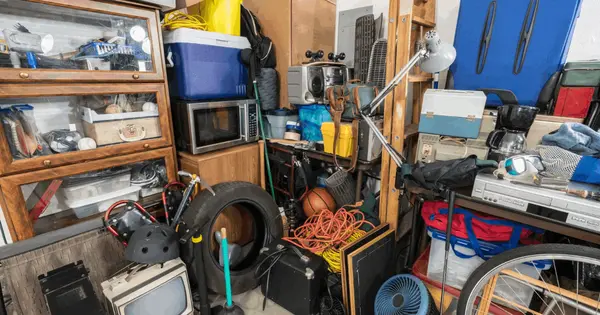
- Storage: usually inexpensive to fix, and almost never a good reason to move by itself.
- A pool: I treat it as a lifestyle purchase, not an investment. Buy it for how you will use it.
- Living through construction: weeks of dust, a kitchen or bathroom out of service, and a lot of decisions. That is a real cost even though it is not on any invoice.
Before you plan anything, ask your city or municipality whether the project needs a permit, and get two or three bids for the specific fix.
What moving up costs
Moving has two sets of costs, and both belong in the comparison.
On the sale side, you have agent fees, title and settlement fees, prorated property taxes and any repairs or prep. I walk through a real example in how much you would walk away with after you sell.
On the purchase side, you have closing costs, inspections and moving costs.
Then there is the loan. Freddie Mac reported a 30-year fixed average of 7.18 percent on November 5, 2026, up from 6.22 percent a year earlier. If your current rate is lower, your next loan will likely carry a higher one. I am not a lender and I do not give loan advice, so your lender is the right person to run your real numbers.
If you do move, the order of your sale and purchase matters. My first 30 days timeline for a move-up buyer and my post on making an offer before your home sells cover that.
Why the comparison does not work yet
Here is the part most people skip. You cannot compare renovating to moving until you know what your home would sell for.
Without that number, one side of the comparison is a real quote and the other is a guess. With it, you can see what you would walk away with, add the cost of the next home, and put it next to the renovation bid.
What the money does not capture
Renovating keeps your street, your neighbors and the daily routes you already know. Moving gives you a chance to change those things, for better or worse.
And some problems cannot be built away. No renovation fixes a lot that is too small, a location that no longer fits your days, or a floor plan that fights you.
A simple rule
Renovate when the house and the location are right and only the space is wrong. Move when what is wrong cannot be built.
If you are not sure which side you are on, answer three questions:
- What is the recurring annoyance, in one sentence?
- Can construction actually fix it?
- If it were fixed, would you want this house in ten years?
If the answers are "yes, yes, yes," get bids. If any answer is "no," start looking at what your home would sell for.
Want to know what your home would sell for?
That is the step that makes the rest of the comparison real. Send me your address, and I will walk you through what similar homes nearby closed for and what that could mean for what you would walk away with. There is no pressure to list, and no pressure to move.
Frequently asked questions
Is it cheaper to renovate or move up?
Neither is always cheaper. Compare what the renovation that fixes your real problem costs against what you would net from selling plus what the next home costs all in, then factor in how long you plan to stay.
Does finishing a basement pay for itself when you sell?
Not in full. The 2025 Cost vs. Value report shows a basement remodel in the West North Central region costing $51,010 on average and adding about $37,897 at resale, which is 74.3 percent. The rest is what the space is worth to you while you live there.
What does it cost to sell and move up in St. Louis?
On the sale side expect agent fees, title and settlement fees, prorated property taxes and any repairs or prep. On the purchase side expect closing costs, inspections and moving costs. A walk-away estimate for your own home shows the real numbers.
How do mortgage rates change the move-up math?
Freddie Mac reported a 30-year fixed average of 7.18 percent on November 5, 2026, up from 6.22 percent a year earlier. If your current loan has a lower rate, your next loan will likely carry a higher one. Your lender can run your real numbers, and I do not give loan advice.
Shari Whay, REALTOR®, Real Broker LLC Helping you find your Whay home. Serving the St. Louis Metro Area and West St. Louis County | shariwhay.com
Cost vs. Value and Freddie Mac figures checked November 16, 2026.
Categories
- All Blogs (68)
- Ballwin (1)
- Buyer Resources (6)
- Buying and Selling Together (7)
- Buying, Selling & Relocation (1)
- Central West End (5)
- Chesterfield (10)
- Clayton (4)
- Creve Coeur (3)
- Events/Things to Do (5)
- Helping Aging Parents Move (6)
- Historic and Luxury Homes (3)
- Kirkwood (7)
- Ladue (6)
- Living in 63108 (1)
- Market Insights & Real Estate Trends (1)
- Market Updates (10)
- Move-Up Buyers (2)
- Neighborhood Guides (23)
- Relocating (2)
- Relocating to St. Louis (2)
- Seller Resources (7)
- St. Louis Luxury Real Estate (1)
- St. Louis Neighborhoods Guide (1)
- University City (2)
- Webster Groves (6)
- West St. Louis County (16)
Recent Posts